


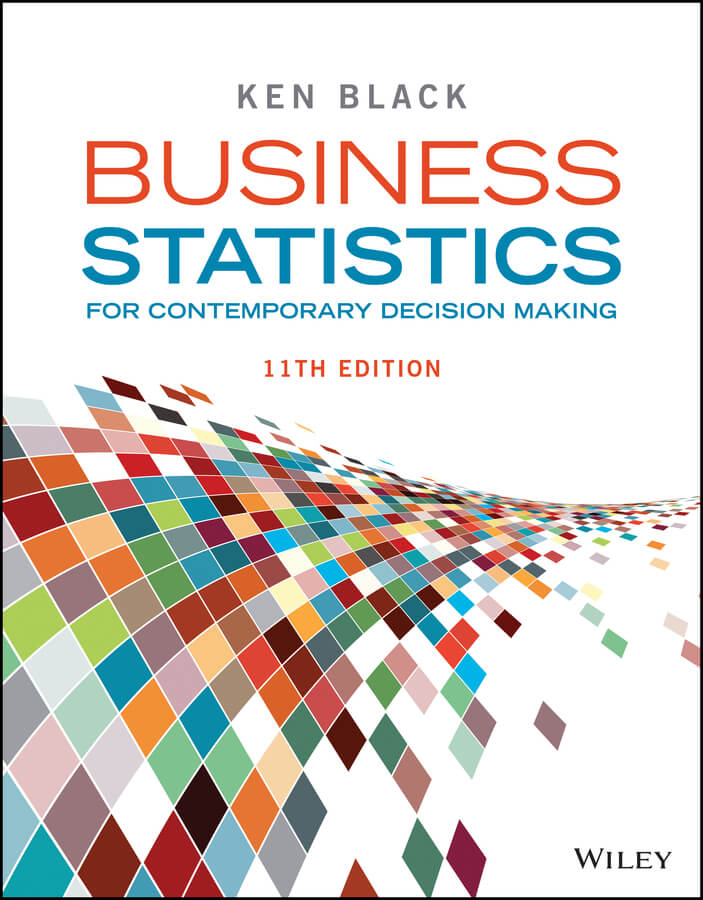
Business Statistics: For Contemporary Decision Making, 11th Edition
By Ken Black
Revolutionize how your students master business statistics. Business Statistics: For Contemporary Decision Making, 11th Edition with WileyPLUS doesn’t just teach statistics—it creates analytical thinkers who thrive in data-driven careers.
This integrated WileyPLUS learning ecosystem combines proven pedagogical excellence with innovative technology that adapts to each student’s learning style. Your students won’t just memorize formulas—they’ll develop the strategic thinking and technical expertise that transforms raw data into competitive business advantages..
Schedule a Demo Request Instructor AccountWant to learn more about WileyPLUS? Click Here
Inspire Efficient Concept Mastery through Adaptive Learning
Adaptive Assignments eliminate one-size-fits-all education. WileyPLUS identifies knowledge gaps in real-time, delivering customized feedback and instruction that meets each student exactly where they are. Use as pre-lecture preparation to prime learning or post-lecture reinforcement to cement understanding—either way, every student gets the support they need to succeed.
Real-World Application That Builds Career-Ready Skills
Every chapter features a Real-World Video Activity, offering chapter-level, graded analysis activities on cutting-edge business video content from Bloomberg.
New Pre-Lecture Videos
Author-narrated presentations introduce key concepts before class, enabling flipped classroom approaches and giving students visual reinforcement of complex topics.
Decision Dilemmas That Mirror Executive Challenges
Launch every learning module with authentic business scenarios that executives actually face. Students don’t just solve textbook problems—they wrestle with the same strategic questions driving C-suite decisions. The Dilemma Solved features transform complex challenges into confidence-building victories.
Data Cases That Develop Professional Expertise
Partner with the American Hospital Association to deliver hands-on experience with genuine healthcare data. Students build both technical proficiency and industry knowledge, graduating with the specialized skills that make them immediately valuable to employers.
ESG Module: Analytics for Social Impact
Prepare students for the future of business with our Environmental, Social, and Corporate Governance module. Students explore how data analysis drives sustainable business practices and social responsibility—skills increasingly vital for modern business leadership.
Cultivate the Skills Students Need for Career Success
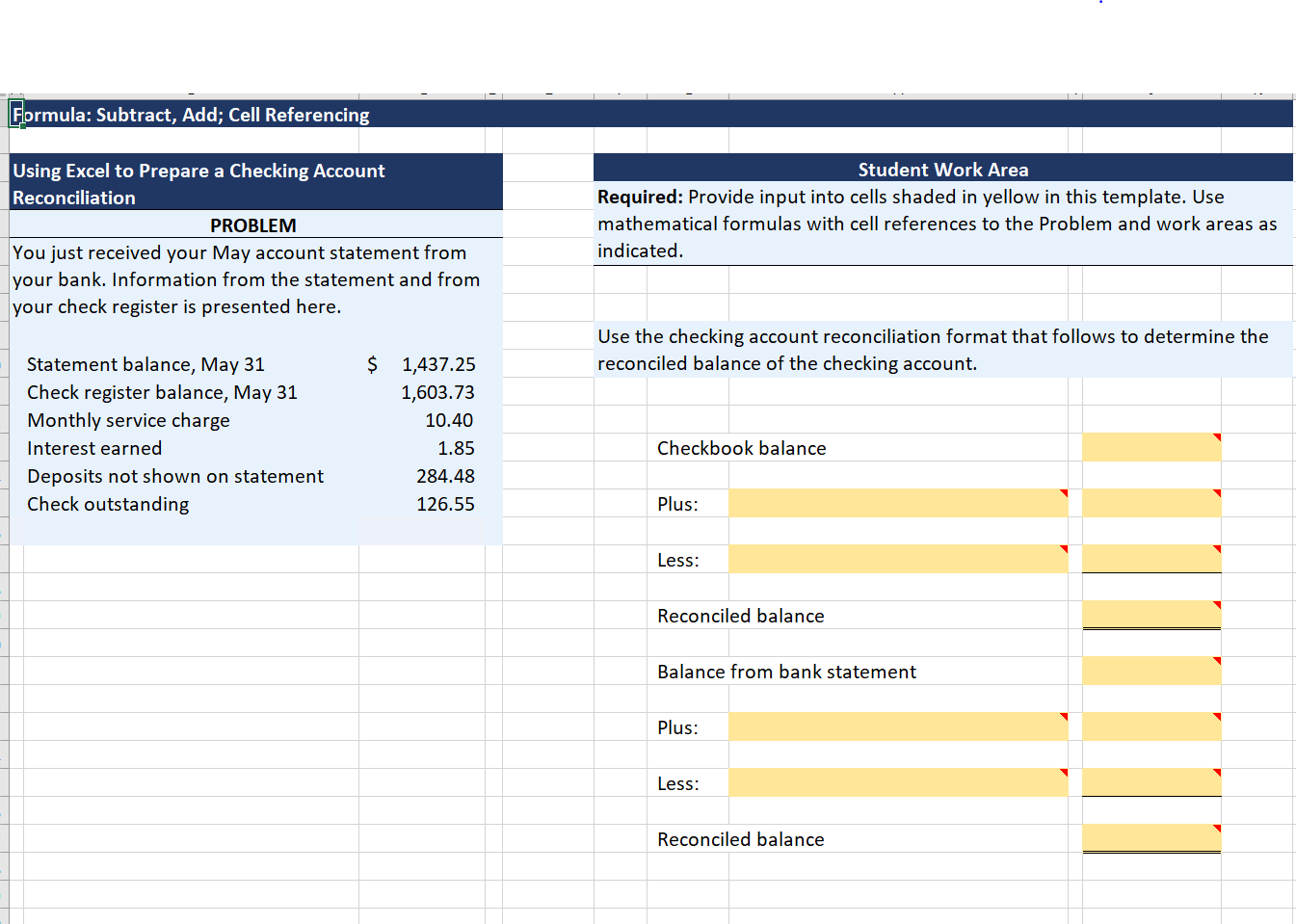
Gradable Excel transforms Excel from a classroom tool into a career catalyst. Students practice with real Microsoft Excel worksheets, mastering the formulas and functions that power business analysis. With instant feedback on every cell, they build the advanced Excel expertise that employers demand while deepening their understanding of statistical concepts.
Our Data Analytics & Business Module was developed in partnership with the Business-Higher Education Forum (BHEF), ensuring students learn exactly what industry leaders need. This module includes industry-validated content that prepares business statistics students for the changing workforce.
Statistics in Business Today exercises showcase statistical analysis in action across industries. Students see how their skills apply to marketing campaigns, financial forecasting, operational optimization, and strategic planning—building the contextual understanding that separates exceptional analysts from the pack.
What’s New
- New Gradable Excel Problems
New gradable Excel problems extend hands-on practice throughout the course. Students don’t just learn about statistical analysis—they perform it using the same tools they’ll use in their careers. - Algorithmic Problem Sets
25% of problems now feature randomized values, ensuring every student faces unique challenges that eliminate shortcuts and encourage genuine understanding. This mirrors real-world analytics where no two datasets are identical. - New Author-Created Exercises
Ken Black’s new custom exercises expand practice opportunities across every chapter, providing focused skill development that aligns perfectly with learning objectives. - New Pre-Lecture Videos
Author-narrated presentations introduce key concepts before class, enabling flipped classroom approaches and giving students visual reinforcement of complex topics.

Ken Black is currently professor of decision sciences in the School of Business at the University of Houston–Clear Lake. Born in Cambridge, Massachusetts, and raised in Missouri, he earned a bachelor’s degree in mathematics from Graceland University, a master’s degree in math education from the University of Texas at El Paso, a Ph.D. in business administration (management science), and a Ph.D. in educational research from the University of North Texas.
Since joining the faculty of UHCL in 1979, Professor Black has taught all levels of statistics courses, business analytics, forecasting, management science, market research, and production/operations management. In 2014, he received the Outstanding Professor Alumni Award from University of Houston – Clear Lake. In 2005, he was awarded the President’s Distinguished Teaching Award for the university. He has published over 20 journal articles and 20 professional papers, as well as two textbooks: Business Statistics: An Introductory Course and Business Statistics for Contemporary Decision Making. Black has consulted for many different companies, including Aetna, the city of Houston, NYLCare, AT&T, Johnson Space Center, Southwest Information Resources, UTMB, and Doctors Hospital at Renaissance. Black is active in the quality movement and is a certified Master Black Belt in Lean Six Sigma. Ken Black and his wife, Carolyn, have two daughters, Caycee and Wendi, and a grandson, Antoine. His hobbies include playing the guitar, reading, and traveling.
1 Introduction to Statistics and Business Analytics
2 Visualizing the Data with Charts and Graphs
3 Descriptive Statistics
4 Probability
5 Discrete Distributions
6 Continuous Distributions
7 Sampling and Sampling Distributions
8 Statistical Inference: Estimation for Single Populations
9 Statistical Inference: Hypothesis Testing for Single Populations
10 Statistical Inferences About Two Populations
11 Analysis of Variance and Design of Experiments
12 Simple Regression Analysis and Correlation
13 Multiple Regression Analysis
14 Building Multiple Regression Models
15 Time-Series Forecasting and Index Numbers
16 Analysis of Categorical Data
17 Nonparametric Statistics
18 Statistical Quality Control
19 Decision Analysis