


Applied Marketing, 4th Edition
By Daniel Padgett, Andrew Loos
Applied Marketing, 4th Edition is a comprehensive yet concise marketing course, designed from the ground up to be applied, practical, and authoritative. The 4th Edition bridges the gap between marketing principles taught in the classroom and those same principles as applied by marketing professionals.
Applied. Students don’t just learn marketing concepts; they practice them. Exclusive interviews with today’s top marketing and brand leaders, virtual company field trips, a brand-new chapter-by-chapter running case following a real company’s marketing strategy, mini cases featuring relevant brands, and Interactive Marketing Plan experiential assignment all put students inside the profession through active, experiential learning.
Practical. A streamlined 15-chapter framework covers only what employers say matters most, six to seven chapters shorter than most principles of marketing texts, with richer content and a deliberate focus on current marketing practice, including digital strategy, AI integration across key marketing functions, and measurement through metrics.
Authoritative. The author team pairs a seasoned marketing academic with an active experiential marketing agency owner, creating an integrated perspective that no single-author text can match. WileyPLUS delivers a fully integrated digital experience, combining the eTextbook, adaptive practice, scenario-based mini-sim activities, and assignable resources in one seamless platform accessible from any device.
Schedule a Demo Request Instructor AccountWant to learn more about WileyPLUS? Click Here
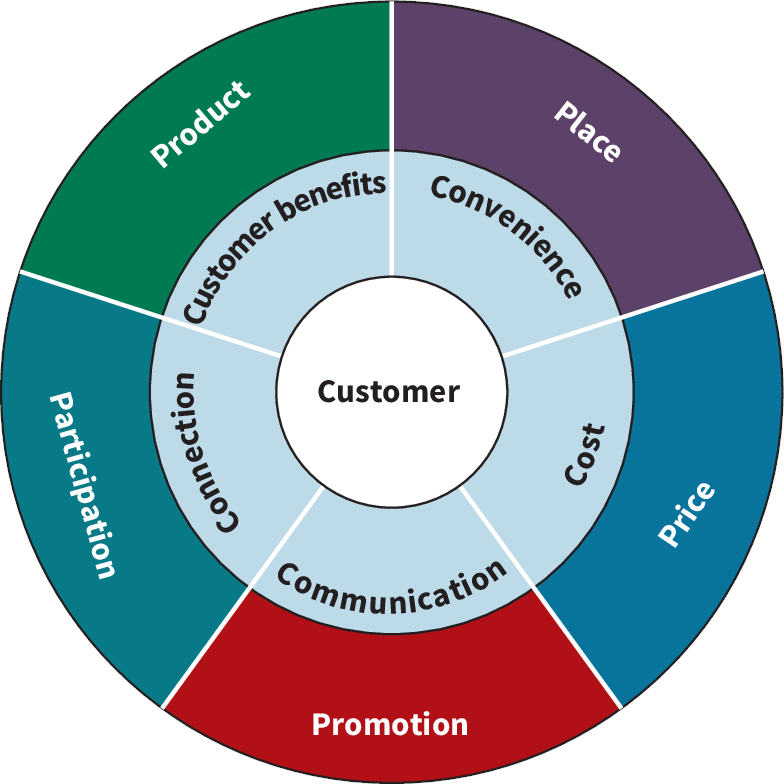
Integrate the Customer Experience Perspective into the Marketing Mix Framework
The extended marketing mix framework moves beyond the traditional 4Ps, adding the 4Cs to center the customer experience alongside the marketer’s view. A fifth P (Participation) and C (Connection) reflects how modern marketers invite customers into the process to build stronger brand connections.
Build AI Skills for Modern Marketing Practice
AI Assignments give students exposure to applying AI tools to marketing activities, with end-of-chapter assignments designed for individual and group use. AI coverage is intentionally woven throughout chapter content, with focused application to segmentation and targeting, the customer journey, promotion, and pricing, reflecting how AI is reshaping the profession today.
Learn Marketing Concepts Efficiently
Adaptive Assignments personalize the learning experience, continuously adjusting to each student’s needs and closing knowledge gaps through scaffolded, just-in-time instruction. Powered by the Knewton Adaptive Engine, these assignments give instructors actionable data to identify and support students who need intervention.
Interactive Application Exercises ground each concept in a real business example, guiding students through concept-based and reflection questions to build and confirm understanding.
Build Real-World Marketing and Critical Thinking Skills
The brand-new Happy Coffee Running Case follows a real company chapter by chapter, giving students a front-row view of how marketing decisions link together into a complete marketing plan. Students complete applied exercises through the lens of an employee working for the company, tackling branding, product assortment, promotion, pricing, and more. Engaging Running Case Videos bring the story to life through founder interviews produced by co-author Andrew Loos.
The Interactive Marketing Plan experiential assignments place students in the role of a marketing intern, building a full company marketing plan chapter by chapter. Each step deepens their understanding of how modern marketing decisions connect into a cohesive strategy.
Mini Cases and Exercises introduce authentic business analysis through a wide range of real marketing contexts. Cases feature companies including Steam, Canva, Zipline, the Bronco Off-Roadeo, and the American Foundation for Suicide Prevention, among many others, offering instructors flexible options for discussion, homework, debate, and application.
Incorporate Video-Based Learning
Industry Expert Interviews open each chapter with candid perspectives from CEOs, thought leaders, and agency leaders including Bill Imada (IW Group), Matt Herilhy (The Indelible), Javier Farfan (NFL), and Christina Todd (Cary Street Partners) among others. Each chapter section pairs with a roundtable discussion between the authors and brand strategist Jasmine Bina (Concept Bureau), exploring key brands, marketing successes and failures, and real issues tied to the chapter content.
Company Field Trip Videos take students inside the Kansas City Royals, Trend Hunter, and the NFL for an insider look at how some of today’s most influential marketing teams work.
Recent Graduate Career Tip Videos connect students with early-career marketers sharing practical advice on career paths, professional skills, and entering the workforce.
FAQ Videos feature the authors answering students’ most frequently asked marketing questions.
Develop Key Data Analytics Skills
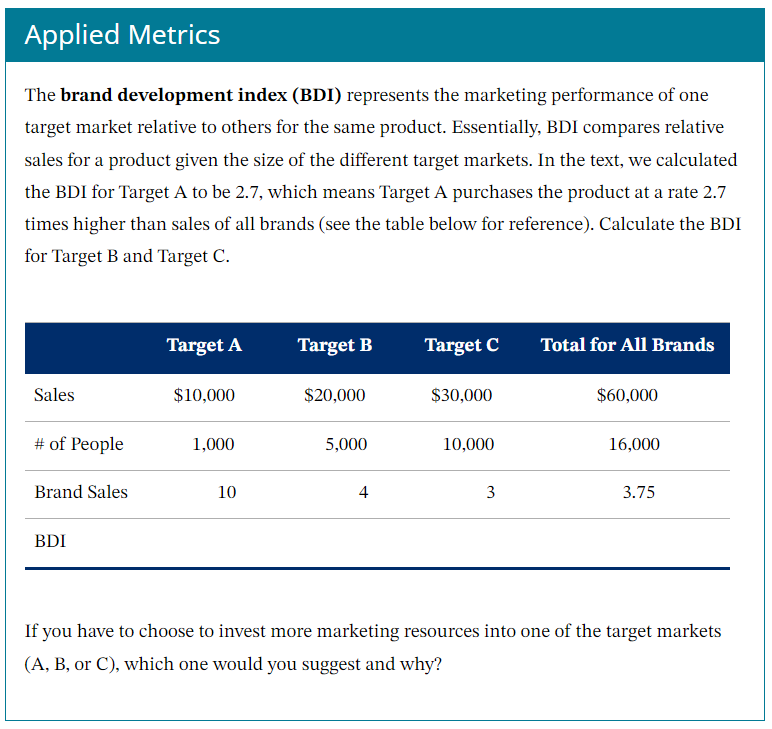
Applied Metrics Exercises, integrated within each chapter, present a real marketing scenario alongside a commonly used metric. Students apply the metric to make an informed business decision, building analytical confidence alongside course content. A dedicated Chapter 14 on Measuring Marketing Effectiveness Through Metrics takes this further with a full analytics framework
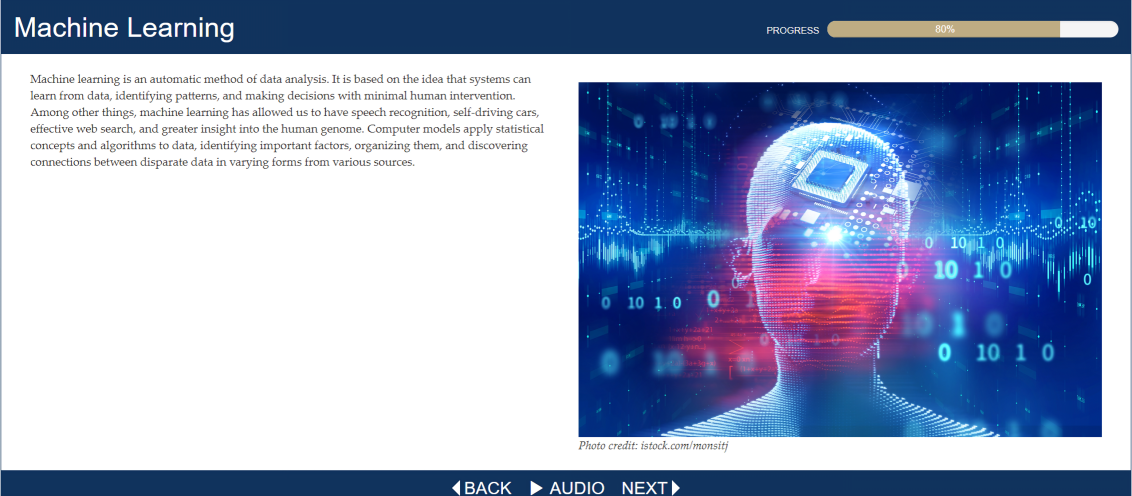
Developed in partnership with the Business-Higher Education Forum (BHEF), the Data and Analytics Business Module equips students with the data literacy today’s workforce demands, through bite-sized lessons, case studies, real data sets, videos, articles, and auto-graded quizzes.
Incorporate Cutting-Edge Topics
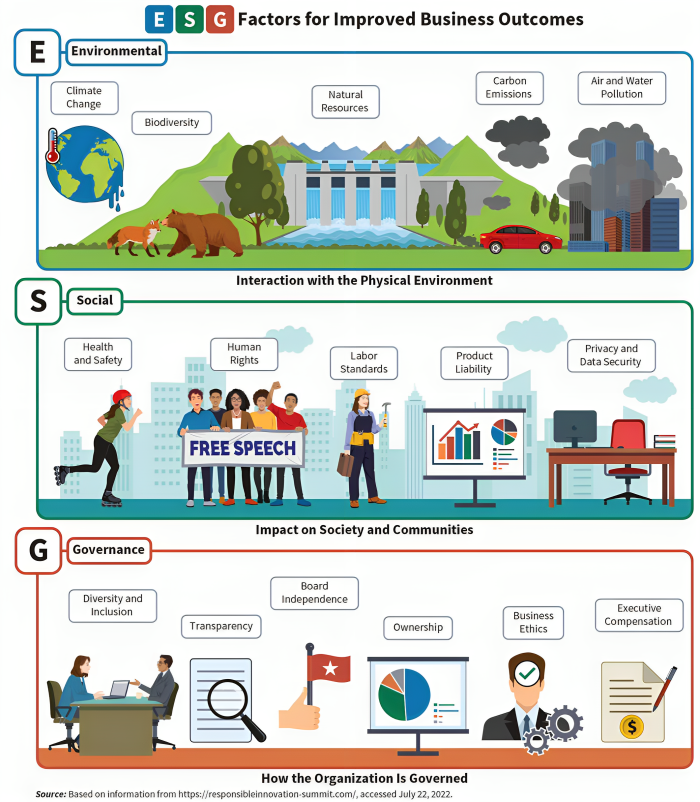
The WileyPLUS ESG Module introduces students to Environmental, Social, and Governance concepts in a business context, working through each pillar with relatable company scenarios, real-world sample reports, and assignable quiz questions.
What’s New to the 4th Edition
- AI Assignments — New end-of-chapter AI Assignments, available for individual and group use, give students hands-on practice applying AI tools to real marketing activities, building fluency with the technologies reshaping the profession.
- Assignment and Test Bank Refresh — Every assignment and test bank question has been reviewed and updated to eliminate dated terminology and ensure precise content mapping, giving instructors confidence in the accuracy and relevance of every assessment.
- Updated Mini Cases — Mini cases have been revised for both content accuracy and accessibility, ensuring all students can engage fully with the material.
- Accessibility Improvements — Existing video and simulation assets have been updated to meet current accessibility standards, ensuring a consistent and inclusive learning experience across the course.
Content Changes
- A New Running Case: Happy Coffee — Our previous This Bar Saves Lives running case has been replaced with Happy Coffee, an exciting new company that gives students a front-row view of marketing strategy in action. Featured at the end of every chapter, the running case covers branding, product assortment, promotion, pricing, and more. Running Case Videos, produced by co-author Andrew Loos, feature founder interviews that bring each chapter’s marketing decisions to life.
- AI Woven Throughout — The 4th Edition includes substantial updated coverage of artificial intelligence and its impact on marketing practice. Students encounter AI applications in context, with dedicated coverage of how AI is being used in segmentation and targeting, across the customer journey, and in promotion and pricing strategy. End-of-chapter material reinforces AI fluency alongside core course concepts.
- Refreshed Company Examples — Company-specific examples have been substantively updated to reflect innovative marketing strategies from today’s most relevant brands, with intentional balance across company size, industry, and geography.
- Significantly Updated Promotion Chapters — Chapters 11 through 13 have been substantially revised to reflect current digital and social marketing practice, including how AI is reshaping promotion strategy today.
- New Industry Leader Profiles — Several new chapter-opening interviews bring fresh perspectives from CEOs, brand executives, and agency leaders working at the forefront of marketing practice. Each profile has a corresponding industry expert video with candid perspectives from current industry professionals.
- Expanded Mini Case Portfolio — New and revised mini cases join the existing library, bringing the total portfolio available in WileyPLUS to roughly 40 cases spanning industries, company sizes, and marketing contexts across all four editions.

Daniel Padgett, Ph.D., is an Associate Professor of Marketing at the Raymond J. Harbert College of Business at Auburn University, Auburn, Alabama. Dan teaches Principles of Marketing in multiple formats (online, face-to-face, hybrid, intensive, etc.) to multiple audiences (marketing majors, business majors, business minors, and nonbusiness majors). He also teaches Marketing Strategy courses at the undergraduate and graduate/executive level and has won teaching awards at both levels. Dan is the director of the Harbert College of Business undergraduate summer study abroad programs in Rome and Madrid and co-director for consulting programs.
Dan believes the classroom should be connected to industry, integrating his work with businesses and managers into his teaching. He consults with companies on topics such as sales compensation, retailing, promotion strategy, marketing planning and implementation, and business development. In addition, he has international experience training marketing and sales managers, particularly in China, having taught executive programs on sales management and marketing strategy for the China Europe International Business School (CEIBS) in Shanghai and Ghana, Shanghai Jiao Tong University, and the Nordic International Management Institute.
Dan’s research also influences his teaching. His research interests include promotion strategy, pricing, services marketing, and international marketing. His research has been published in the Journal of Marketing, Journal of Marketing Research, Journal of Advertising, Journal of Interactive Marketing, Journal of Retailing, Journal of Current Issues and Research in Advertising, Management International Review, Journal of Business Research, Journal of Marketing Education, Marketing Education Review, and Journal of Consumer Marketing, among others. He is on the editorial review boards of Psychology & Marketing and the Journal of Business Research and has also served as a reviewer for textbooks in services marketing, marketing management, and business-to-business marketing. He is currently a member of the American Marketing Association and the Society for Marketing Advances.
When he is not teaching, traveling abroad with his study-abroad programs, or working on research, Dan enjoys spending time with his wife of over 30 years, Lisa, and his three sons Nathan, Mitchell, and Daniel (all Auburn University graduates). The family likes to travel, especially internationally when possible, and in a typical year Dan spends between three and four months abroad.

Andrew Loos has always believed that marketing is about conversations and that learning should be about experiences. After 25 years in the marketing space, he also knows that it’s people who will always be the best medium to impart knowledge and influence purchase decisions.
Early in his career, Andrew noticed most companies struggled to humanize their brand and effectively interact face-to-face with their target consumer. This led him to start Attack!, a field marketing agency designed initially to deploy brand ambassadors who embodied the products they were promoting. Andrew now runs the LA-based experiential marketing agency, Honor and Impact, which specializes in live consumer experiences, brand creative and strategic marketing services.
His success in the marketing industry, paired with author credits on John Wiley and Sons’, Applied Marketing and You Got This! business series, immersed Andrew in the world of higher education where he sees a very similar challenge: classrooms struggling to integrate experiential learning into a student’s academic journey. He believes that students achieve mastery of a skill faster when they have the opportunity to see and practice real world scenarios at the higher education level.
Sharing solutions with others in the marketing industry and academia is what Andrew loves most. Outside of work, he dedicates part of his time to speaking, mentoring, and consulting in the spirit of scholarship, and the free exchange of ideas within the business space.
Andrew grew up in Kansas City but has had his feet in the Southern California sand for the past 24 years. He resides in the South Pasadena area of Los Angeles with his two smart, creative and kind sons, Tyler and Cameron, who consistently beat him in chess, tennis, and any game on the Nintendo Switch.
When he is not rolling up his sleeves at Attack!, giving talks, or planning new brand campaigns, you’ll find Andrew featured in publications like Adweek: “Attacking Experiential,” Fast Company: “Get Your Team Thinking Creatively Again,” Forbes: “Three Ways to Improve Communication with Clients,” Washington Post: “How Thinking Like a Big Company Can Help You Become One,” and Inc.: “Best Advice I Ever Got.”
Born in Lincoln, Nebraska, raised in Shawnee, Kansas (your Wizard of Oz joke here), and an alum of Kansas University, Andrew now lives in sunny Los Angeles, California, with his two sons, Tyler and Cameron, whom he loves, adores, and loses at checkers to more often than he’d like.
Chapter 1: What Is Marketing? Chapter 2: Organizing and Planning for Marketing Strategy Chapter 3: The Marketing Environment Chapter 4: Customer Behavior Chapter 5: The Role of Research in Marketing Chapter 6: Using Segmentation, Targeting, and Positioning to Distinguish a Brand Within the Market Chapter 7: Applying the Marketing Mix Chapter 8: Delivering Products and Brands That Meet Customer Needs Chapter 9: Place Decisions and Customer Convenience Chapter 10: Managing Price and Customer Cost Perceptions Chapter 11: Using Group Promotion to Communicate with Customers Chapter 12: Using Personalized Promotion to Communicate with Customers Chapter 13: Encouraging Participation to Connect with Customers Chapter 14: Measuring Marketing Effectiveness Through Metrics Chapter 15: Finalizing a Marketing Plan Appendix A: Developing an Integrated Marketing Mix